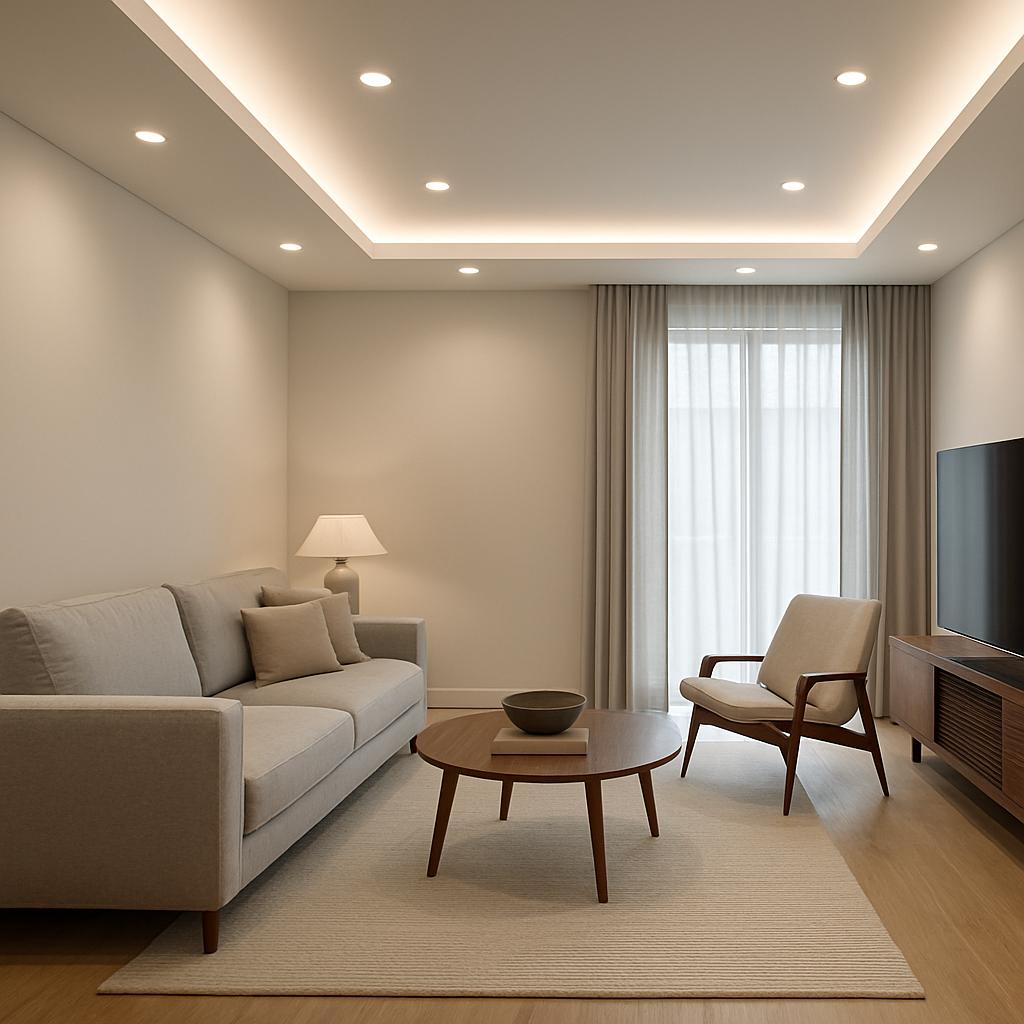
From upgrading an existing wall and redesigning a ceiling to fire protection and acoustic comfort, the right drywall solution starts with the specific requirements of each space.
Not every space has the same needs. In one room, we may want better acoustic comfort. In a bathroom, we need materials suitable for conditions with higher atmospheric humidity, while during a renovation, we may be looking for a flexible way to upgrade a wall or ceiling, or even change the style and positioning of the lighting.
This is where one of the key advantages of drywall systems becomes clear: the system can be designed according to the application and the specific requirements of the space.
- When We Want to Upgrade an Existing Wall
We don’t always need to build a new wall.
Plasterboard can be used to line an existing surface, creating a new wall surface that is ready for its final finish.
When combined with insulation materials as part of a properly designed system, it can also contribute to improved thermal and acoustic comfort within the space.
- When We Want to Use the Ceiling Differently
Plasterboard applications are not limited to walls.
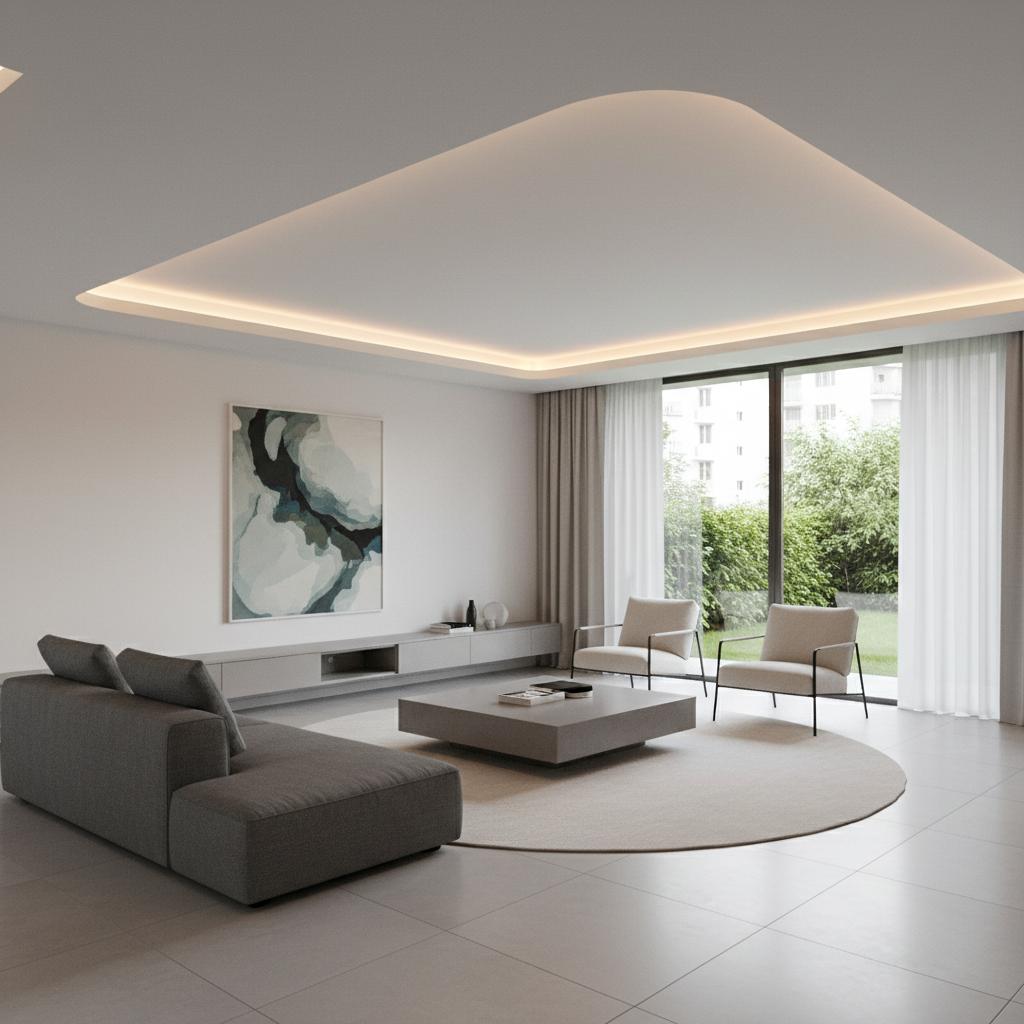
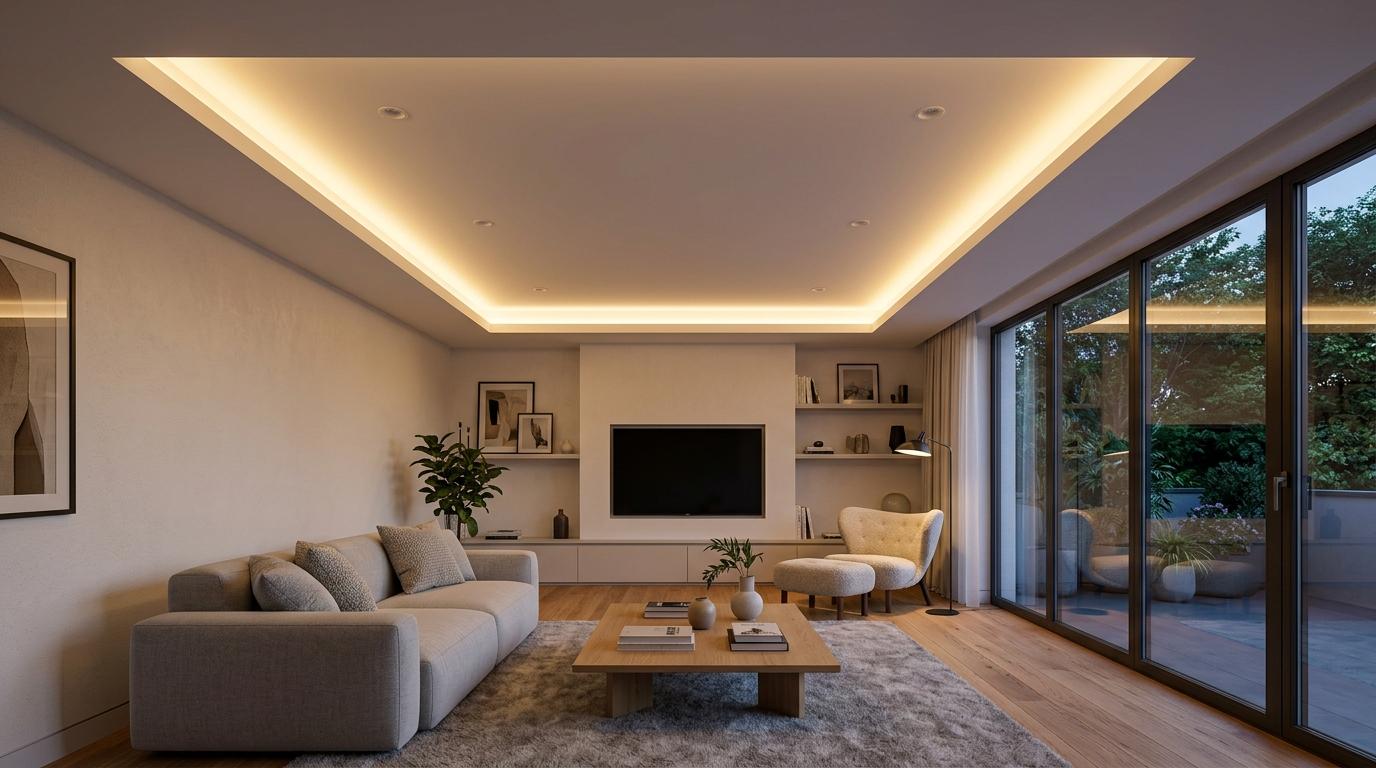
A suspended ceiling can change the look and feel of a space while also concealing services or other construction elements that we do not want to remain visible.
In this way, drywall systems can address both functional and aesthetic requirements within the same space.
- When Greater Resistance to Humidity Is Required
A bathroom has different requirements from a bedroom or living room.
For applications where greater resistance to atmospheric humidity is required, specific types of plasterboard designed to offer increased resistance under these conditions can be used.
Choosing the right solution, therefore, is not simply about using plasterboard. It is about selecting the appropriate type of plasterboard for the specific application.
- When Fire Protection Is Part of the Requirements
In some applications, the requirements go beyond the layout or appearance of the space. Fire protection may also be an important consideration in the design.
Specific types of plasterboard can form part of appropriately designed systems intended to meet particular fire-resistance requirements.
In these applications, performance depends on the overall composition of the system rather than on a single material alone. FIBRANgyps systems can achieve fire resistance of up to EI240 — equivalent to 4 hours — and reach heights of up to 12 metres, approximately the height of a four-storey building.
- When We Want Better Acoustic Comfort
Noise travelling between rooms can significantly affect everyday comfort, particularly when the same spaces are used for resting, working or different activities.
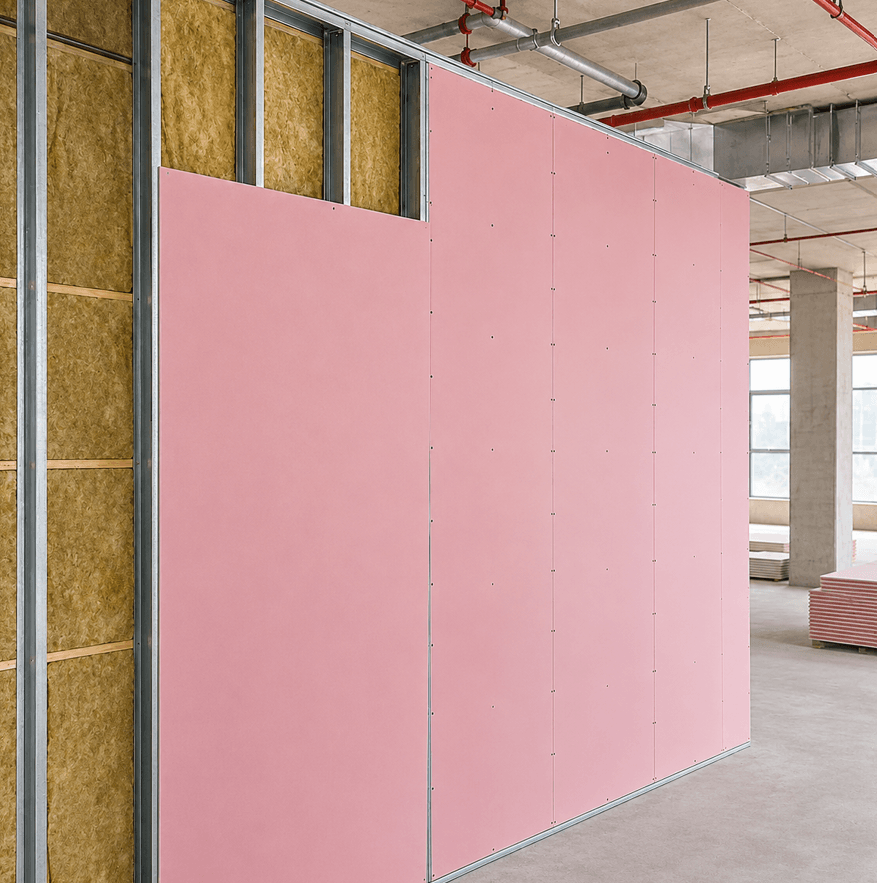
A properly designed drywall system can combine plasterboard with insulation materials, helping to reduce sound transmission between spaces.
Here too, acoustic performance does not depend on the plasterboard alone, but on how the different elements of the system work together.
At the same time, drywall systems can be used to create spaces with high acoustic quality, where sound can be experienced with greater clarity and definition.
FIBRANgyps: Starting with the Needs of the Space
The FIBRANgyps range includes different types of plasterboard for a wide variety of drywall applications.
This allows us to change the way we approach material selection. Instead of starting with the plasterboard and asking where it can be used, we start with the needs of the space and select the right solution for the application.
A wall, a ceiling, a space requiring greater resistance to atmospheric humidity, or a construction with acoustic comfort and fire-protection requirements will not necessarily require the same solution.
The right choice starts with what we want to achieve within the space.